
Product Overview
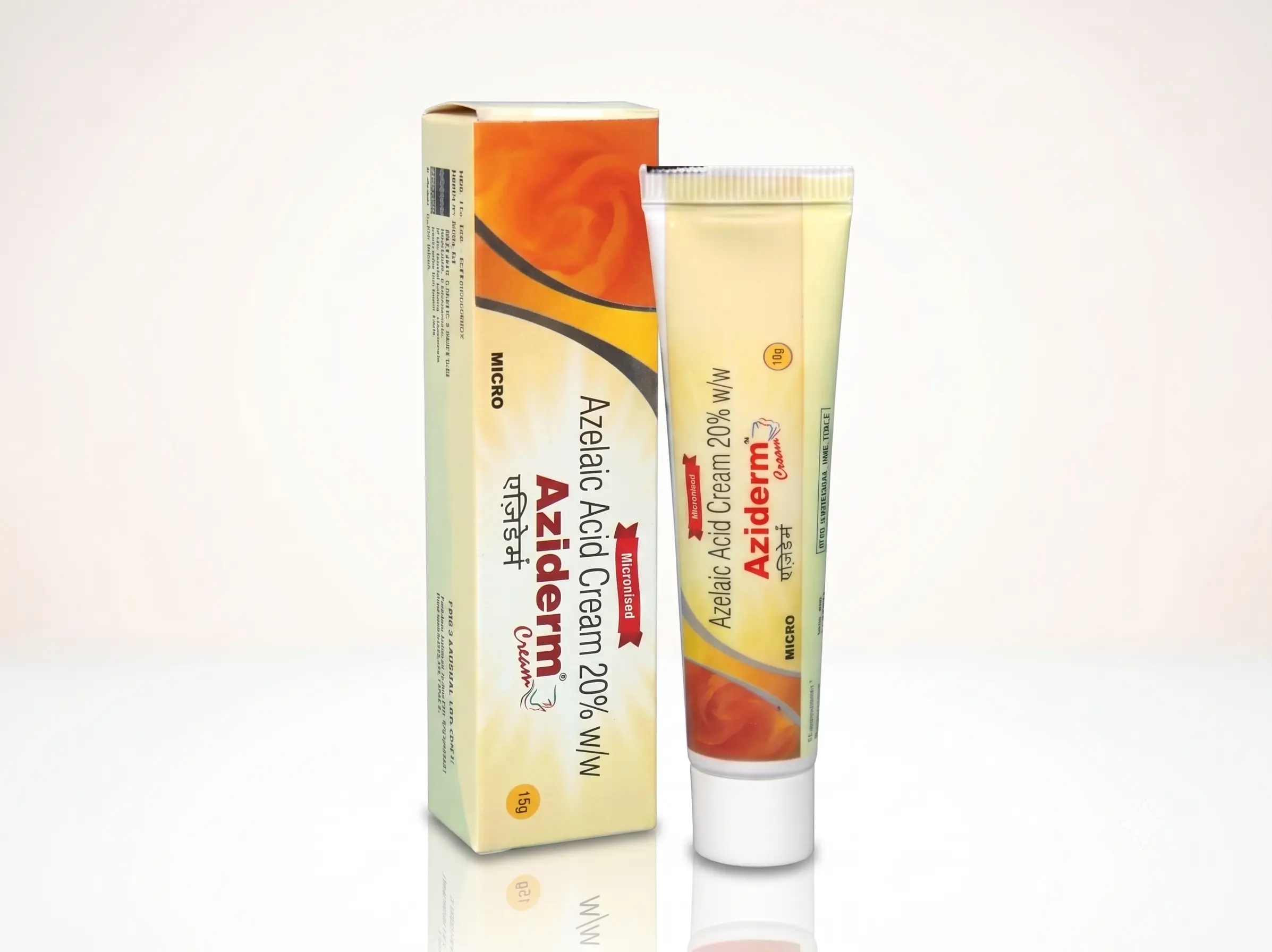
Aziderm 20% Cream (Azelaic Acid 20% w/w) is a high-purity, dicarboxylic acid topical reference complex formulated for specialized in vitro and preclinical research investigating follicular keratinization kinetics, epidermal ROS scavenging mechanisms, and microbial inhibition dynamics. Engineered with a stable 20% concentration, this topical research compound enables scientific models to track the selective down-regulation of tyrosinase activity and the cellular modulation of pro-inflammatory cytokines in dermal cell lines.
Experimental protocols within cellular assays prioritize assessing the compound’s capacity to normalize keratinocyte differentiation, attenuate localized hyperpigmentation markers, and disrupt Cutibacterium acnes proliferation pathways. Aziderm 20% serves as a primary analytical standard for examining anti-inflammatory cascades, follicular desquamation kinetics, and oxidative cellular protection.
Primary Research Applications & Benefits
- Inflammatory Acne & Breakout Prevention: Targets inflammatory acne lesions (pimples) while evaluating cellular mechanisms to prevent clogged pores and new breakout cascades.
- Hyperpigmentation & Melasma Fading: Assays the targeted down-regulation of tyrosinase to fade post-acne marks, melasma, and brighten uneven dermal tone.
- Erythema & Rosacea Reduction: Mitigates localized inflammatory markers and swelling associated with sensitive dermal models and rosacea.
Technical Specifications
| Parameter / Feature | Specification (Per Research Tube) |
|---|---|
| Active Compound | Azelaic Acid (Saturated Dicarboxylic Acid) |
| Concentration Ratio | 20% w/w (200 mg/g active reference standard) |
| CAS Registry Number | 123-99-9 |
| Molecular Formula | C9H16O4 |
| Molar Mass | 188.22 g/mol |
| Purity Grade | ≥ 98.5% Active Analytical Grade (HPLC & Mass Spectrometry Verified) |
| Physical Format | Homogeneous, sterile, topical cream matrix base |
| Target Evaluation Models | Hyperpigmentation, Melasma, Inflammatory Acne, Rosacea / Sensitive Tissue |
Laboratory Handling & Storage Guidelines
- Aliquoting & Application: Transfer micro-aliquots using sterile stainless steel spatulas or calibrated analytical mass dispensers under controlled laboratory conditions to avoid environmental cross-contamination.
- Storage Environment: Store sealed research containers in a cool, dry, climate-controlled environment at temperatures between 15°C to 25°C (59°F to 77°F). Protect strictly from freezing, elevated thermal exposure, and direct solar radiation.
- Container Integrity: Keep the primary cap tightly sealed immediately after dispensing to preserve baseline emulsion stability and prevent phase separation or atmospheric degradation of the active dicarboxylic matrix.
⚠️ Regulatory Compliance & Mandatory Disclaimer
IMPORTANT NOTICE: This product is formulated and distributed exclusively as a pure research topical complex for laboratory evaluation, academic investigation, and in vitro experimental models. IT IS STRICTLY NOT FOR HUMAN CONSUMPTION, DIAGNOSTIC, THERAPEUTIC, OR COSMETIC APPLICATIONS. All purchasing entities must represent certified academic or scientific research professionals.


Reviews
There are no reviews yet.